Thursday, January 7, 2016

My First High Power Rocket

I've just purchased my first true high power rocket kit: the Aerobee 150A, by Mad Cow Rocketry, from JonRocket.com.


My Estes Pro Series II rockets could technically be flown as high power rockets. Their 29mm motor mounts would allow me to install a small H motor. But they are generally considered mid power "model" rockets.

The Aerobee 150A has a 38mm motor mount - a high power mount. At 38mm, there is a wide selection of motors you can use to fly to different altitudes, and with a motor adapter, you can still use the smaller 29mm motors.

JonRocket only had one left in stock, and since I've been shopping there for over a year, I've accrued a lot of rewards points. When you buy from JonRocket, you get some points with every purchase, and each point is worth one dollar toward future purchases.

I only recently found this out - so I got this large kit, which normally sells for nearly $70, for only 18 bucks! Too good to pass up.

The Aerobee 150A was a NASA sounding rocket from the 1960s, and was part of the whole Aerobee "family" of sounding rockets.

The Aeorbee 150 sounding rocket - different from the Aerobee 150A rocket (see below)

Mad Cow has a great reputation for good quality kits. I won't be able to fly this rocket until I get a Level 1 high power certification. But I want to set this aside and do a little homework before I build it.

Here's another article from a 1997 edition of High Power Rocketry magazine on the Aerobee family of rockets. The 150A (which was similar to the 150, but with four fins instead of three) has its own section. Finding scale data on historic rockets can sometimes be difficult. I'd like to see what I can find out about what colors this rocket was before I build.

I also need to do some research on what's called dual deployment, a method in HPR of deploying the recovery system using altimeters rather than just an ejection charge in the rocket motor. Instead of simply having one big parachute come out when the rocket is at apogee, and instead of relying on an ejection charge built into the rocket motor as with model rocketry, in dual deployment, there are two ejection charges, controlled by an electronic, barometric altimeter. The first charge fires at apogee - the highest point in the rocket's flight - and the rocket descends on a small drogue parachute. This stabilizes the rocket's descent, and brings it down quickly to a lower altitude. But that's not really enough for a soft landing.

At a lower altitude, the altimeter causes a second ejection charge to fire, which deploys the main parachute. This chute is large enough to bring the rocket down to a soft touchdown.

A diagram of the flight events in a dual deployment rocket. From westrocketry.com.


The main reason for dual deployment is to keep the rocket from drifting too far for successful recovery. If it came down on one big chute from apogee, like a small model rocket, a high-flying, high power rocket might drift very, very far.

Also, some rocketeers like the added complexity of building a system with two events. And, of course, the altimeter will tell you how high the rocket flew, once you recover it.

I understand the basics, but have never tried it myself, so I've got some homework to do. In the mean time, I have tons of low and mid power rockets to finish building.

In any case, I'm pretty excited to have this large rocket on its way to my house.

Like my Facebook page for blog updates and extra stuff.

Tuesday, January 5, 2016

A Chat with Aerotech, Part 1

Season 2, Episode 7 of The Rocketry Show is up now, featuring our conversation with Charles Savoie, General Manager of Aerotech.

This conversation was really great, and it was long enough - and informative enough - to make it a two-part show.

We discuss Aerotech history a bit, plus some news of things upcoming. And since Aerotech and Quest Aerospace merged not long ago, we also have some Quest news - and it all seems pretty good!

People have been concerned about the supply of goods from Quest - particularly motors and the indispensable Q2G2 igniter. We talked with Charlie about that, and it should answer some questions.

I'm writing this before listening to Part 1, so I'm not sure what part of our interview is in there, but it's a great show, and I think you'll like what you hear. Part 2 will arrive soon!

Like my Facebook page for blog updates and extra features.

Monday, January 4, 2016

2015 Rocket Launch Slo Mo Supercut

Last year, I posted a video compilation of all the rocket launches I'd filmed up to that point, played in slow motion. I decided this will be an annual thing.

I got less video than I wanted to, but that turns out to have been a blessing. They're not all my rockets - some are from the Rocket Camp kids I taught last summer, and some are other CMASS members' rockets.

I missed my self-imposed deadline of December 31 for this year's video. It was a lot harder to trim down this year, because there are about 84 individual launches in this video!

But it's done. Enjoy.


Like my Facebook page for blog updates and extra stuff.

Saturday, January 2, 2016

2016 Rocketry To-Do List

I walked into the Rocket Room today, and it hit me that I hadn't touched anything in there in maybe a week or more. The sun was streaming in through the windows, and it looks like my girlfriend tidied up in there a bit. It looks pretty in the sunlight.

This is much cleaner than it is when I'm working on something.

Time to put it to good use.

I've had a few things holding be back from being as productive a rocketeer as I was a year ago. My job sometimes has me starting at 4:30 in the morning, and sometimes has me quitting at 11:30 at night. This back and forth can be a bit draining. But things are about to get more regular for me, and I should have my Saturdays clear for launches.

So, here are some goals I have for the upcoming year.

1. Blog More Frequently

I was asked to be on The Rocketry Show because of what I had been doing on this blog - writing informative posts for rocket n00bs. But in the last few months, I really haven't written as much as I'd like to.

I have started about 8-10 good blog post topics, but haven't finished any of them. The kind of post I feel most proud of on this blog is a bit long (for a blog), but is clearly spelled out with lots of photos, so any rocket n00b who comes along can understand it. That takes time and energy, and if I'm too tired, I don't write. If there's not enough light, I have to wait on taking photos.

Yet, I'm still getting page views - usually between 25-50 per day. Some of these may be brand new people, but some may be previous readers checking back to see if I have anything new on the blog. I have no idea. Anyway, my first goal for the year is to create more content for rocket n00bs and rocket veterans to have something new to look at. A commitment to a little bit of writing each day might be called for, even if I don't finish a post in one sitting.


The new work schedule should help with that.

2. Figure Out the Painting Situation

Since my move to Boston, I haven't finished a single rocket. Not a single one - in six months. A major roadblock to completing a rocket for me is painting.

Back in Bloomington, I had plenty of outdoor space to paint rockets - and to do so privately.

Estes Big Bertha on a painting stand behind my old apartment
Here in Boston, I have to paint out front, and there's not much space between my apartment and the street. I don't want to get paint on the house. I need to figure out where to paint - especially larger rockets.

One option may be to join a makerspace - also called a hackerspace. These are a sort of co-op, where people get together to share tools and ideas.

I'm also considering building an indoor spray painting booth. But this must be done with care. A spray booth must keep paint inside, but must be properly ventilated. I've seen a few DIY spray booths online, but some of them are potentially dangerous. A box of sealed plastic sheeting is not enough if there's no ventilation. Spray paint fumes can cause brain damage in high concentrations!

A few weeks ago, I did manage to get a few small rockets primed, but that's it so far.

Estes Goblin

Estes Reflector

Imperius D - my own design. This was originally called "Donor's Rocket" on this blog. Mine will hold a D motor.

Astron Sprint XL Clone - this is a clone of an Estes kit. I'm building the kit, but wanted to
practice sanding the eliptical fins into airfoil shapes properly before trying it on the real thing.

3. Improve My Recovery Rate


The first several months I launched rockets, I had great success. Chad lost a ton of his rockets. I managed to keep all mine on the field and recover them with little to no damage.

Then, my first launch of 2015, I had my first loss to a tree.

3D Rocketry Nautilus II - my first tree loss.
The 3D Rocketry Nautilus II got badly tangled on a tiny tree branch very high on a tree on a steep incline. There was no retrieving it. It was still stuck there six months later, when I last launched on that field.

Most of my Bloomington launches went well. Some of them left the field, but I was able to retrieve them. Nonetheless, my record took a few hits.

Since moving to Massachusetts, I've had worse luck. Despite flying on a much bigger field, I have recovered far fewer rockets. Amesbury gets breezy. And I have been trying to fly higher. The higher you fly, the bigger the chance of losing a rocket. I've had several leave the field entirely and disappear in deep scrub, sticker bushes and swampy grassy areas. It has made me nervous to launch anything at all, and I only launch a few of the rockets I take out each time.

Since my first club launch, I'd say I've had recovery failures of over 50% of all my rockets. I look at the fleet in my rocket room, and it looks a lot smaller than I remember it. I need to fix this, and get back to launching with confidence.

This can largely be improved with careful parachute selection. It seems that Estes kits often come with parachutes that are a little larger than they need to be. The Cosmic Explorer has a large, 18 inch parachute which brings the rocket down very slowly. It's beautiful to watch, but it does mean the rocket has more time to drift in the breeze. Replacing the chute with something smaller would bring the rocket down a little faster, and it would still likely land intact.

Some rockets may need to recover on a streamer. I admit I have only done this with rockets which come with a streamer as a kit. Streamers make me nervous otherwise. But my first scratch build, the Janus I two-stage rocket, which flew very, very high, was pretty lightweight.


A nice, big streamer would probably have brought it down closer to the launch site and it would have survived intact despite a faster descent. Instead, I lost it - the first rocket I flew at my very first club launch. Streamer recovery is something I need to experiment with.

Another tactic to improve odds of recovery is to angle the rocket into the wind. For safety's sake, the NAR Model Rocket Safety Code states that you shall not launch at more than 30 degrees from the vertical. But that does give you some leeway. How much angle to tilt the launch rod will require some practice on my part.

Of course, selecting the right motor for the day's wind conditions is also important. But I've seen plenty of rockets at CMASS launches which went much higher than mine, yet which recovered just fine while mine did not.

4. Launch an Electronic Payload

I've had a Jolly Logic altimeter for nearly a year now, but I have never launched it! Consequently, I really have no idea how high any of my flights have been.

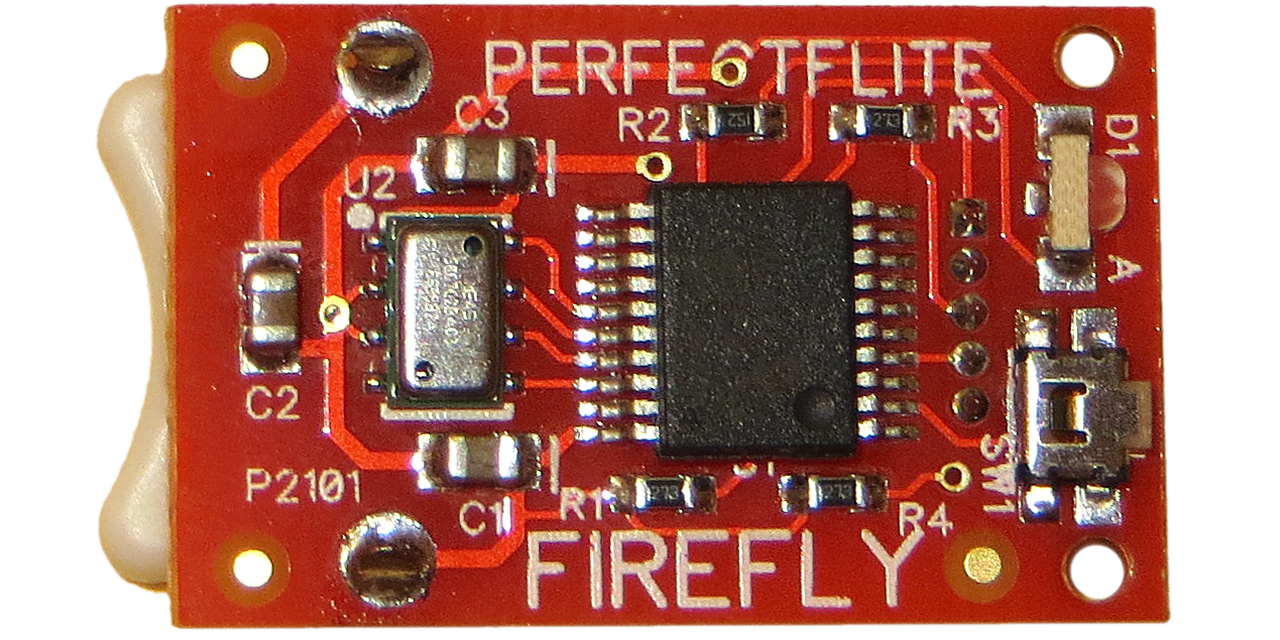
Until I can more reliably recover my rockets, however, I'm reluctant to use a $70 altimeter. In the mean time, I'll probably pick up the much less expensive FireFly altimeter and try that out.

The FireFly altimeter, from PerfectFlite

The FireFly, from PerfectFlite Direct, is not as fancy as the Jolly Logic, but it's tiny, and at about $22, it's a good choice.

I also need to successfully launch a camera. I've had a few tries. I've had a few failed cameras, and lost one on a payload section which drifted far from the launch site on the wind. The closest I've gotten to success were a couple of bad flights.


5. Finish Building My Estes Pro Series II Kits

 Earlier, I wrote about beginning to build two of the Estes Pro Series II kits - large mid power rockets with 29mm motor mounts. I began with the Nike Smoke, a scale model of a NASA sounding rocket, and the Ventris, a cool-looking rocket with a fat payload section.

Nike Smoke

Ventris
These are great kits, and Estes has been selling many of its Pro Series II kits dirt cheap (there has been much speculation that Estes is getting out of the mid power market. I have a feeling they'll hold on to their E2X kits and maybe the Mega Der Red Max and Nike Smoke, but Ventris, Leviathan, Partizon and Argent will probably all be gone soon.). These are meant to fly mostly on F and G motors, but many people use them to get into high power rocketry, as they will also hold a small H motor. They're big and impressive in person, especially if you've only built small low power model rockets.

I've been chipping away on both the Nike Smoke and Ventris for months. They're nearly ready for primer and paint. I've also quietly been working on the Estes Leviathan, a nice fat model (now discontinued by Estes), and a pretty good choice for a Level 1 high power certification flight, if you choose to use a 29mm rocket for that purpose.

I need to finish these guys. I want to have them ready by April, when CMASS, my NAR section, begins flying again.

6. Find a Nearby Launch Site

Because I live in Boston, I go out of town to launch rockets with CMASS. In the summer, they fly at a smaller field in Acton, MA, which is not terribly far from where I live. In the fall and spring, I have to drive all the way up to Amesbury, which usually takes me much longer than it should - at least an hour and a half, sometimes two hours.
But, unlike when I lived in Bloomington, IN, there's no place for me to go and casually launch a few small rockets. This is a sad state of affairs. If I want to go try out a new design, or if I want to show someone a quick launch (I have a coworker who is also a nanny as a second job, and I told her those kids would love rockets), or if I just need a little inspiration... When I haven't launched in a while, my building slows down, because I forget that feeling of why I'm doing this. Launching a few gets me hyped about building again... Anyway, if I just want to do a casual, non-club launch, by myself or with a few friends, I have nowhere to do it.

It's not that Boston doesn't have parks. It's that I don't want trouble.

Model rocketry is an overwhelmingly safe activity, despite the recent accident in California you may have read about. And model rocketry is legal in all but a few areas which have unfortunately banned it. I don't know for sure, but I'd bet there's nothing on the books banning model rocketry in Boston.

Despite this, I have heard of people having trouble. This guy in particular had the Boston police break up a scout launch, and it sounds like it was kind of a frightening experience!

Part of the problem is that model rocketry has a low public profile. Public familiarity with the hobby of model rocketry was probably much higher in the 1960s and 1970s, even the '80s.

From retroland.com

These days, however, despite the fact that the hobby seems to be growing, it's not as well-known a hobby outside the community of those who pursue it.

And despite the fact that rocketry is very safe, it looks really dangerous to an outsider. I've heard people say "that can't be legal!" People have mistaken model rockets for fireworks, for tiny missiles, etc. And if you're launching in a park and someone sees you and complains to the authorities, they have to respond. Not every officer can be expected to know every statute by heart, I suppose, and if something looks illegal or dangerous, they can shut you down. This is not an experience I want to have.

There is one giant park in a part of Boston I'm unfamiliar with. It's called Millennium Park, and apparently people do occasionally launch there. One local cub scout troop reportedly launches there each year. It's supposedly really big. I'll have to go check that out. Maybe I'll try to make some contacts at MIT - they do a model rocketry camp for kids in the summer. Perhaps they know of a good launch site.

7. High Power Rocketry Level 1 Certification

High power rocketry (HPR) is the big brother to model rocketry. Unlike low and mid power model rocketry, you must obtain a certification to fly, and launches must be conducted using a waiver from the Federal Aviation Administration. There are several criteria which define a rocket as "high power," but a really basic definition is a rocket which uses an H motor or higher.

A "Stretch Leviathan" by Jim Seibyl - Gheem of The Rocketry Show - lifts off

High power rocketry has three certification levels. Level 1 allows you to purchase and launch H and I motors. Level 2 will allow you to purchase and use J, K, and L motors, and a Level 3 certification will allow you to fly M motors and above, and to spend all of your money.

To obtain a high power certification, you must be a member of either the National Association of Rocketry or the Tripoli Rocketry Association. A Level 1 certification can be pretty simple if you do not try to make it complicated.

You have to build and fly a rocket on an H motor (which you may purchase if it is for the certification flight). You have to have one or more witnesses who are NAR or Tripoli certified. The flight must be successful and the rocket must be recovered. The recovered rocket must be judged to be able to fly again without major repair. In other words, minor damage, such as a chip in the paint job, will not disqualify your flight, but a broken fin will.

You can make a Level 1 certification flight more complicated by adding electronic parachute deployment, but you may keep it as simple as a very large model rocket launch.

The idea is that you must prove you are capable of building, launching and recovering a high power rocket safely, because these things are larger and heavier, so the risks are greater. Once you pass your certification flight, you may purchase and use H and I motors.

At one point, I thought I might have obtained my Level 1 by now. Then I realized I was in no hurry. Mid power rockets are quite impressive, and have a lot of the thrill of HPR with less of the cost and no certification requirements. And I haven't launched many MPR rockets yet, so I have that to look forward to still. HPR is costly, so I probably won't launch much. And yet...

And yet, there's a certain pride to be had from having a high power certification. Besides, I have the rockets and casing.

At a CMASS launch this fall, I went to our club vendor, Animal Motor Works - which sells kits and Cesaroni motors. Gloria of AMW had made turkey soup for the occasion. I'd arrived late, so I missed the famous CMASS hot dogs. I went to have some soup and introduce myself to Gloria.

Gloria's a charming lady. We chatted for a bit, and I said I might want to get some F or G motors. After a bit, she said "Why don't you have your Level 1 yet?"

I left with a belly full of soup and a Cesaroni Pro 29 Starter kit, which includes 29mm 3-grain reloadable motor casing, which can hold F, G or H motors. It would be perfect for a Level 1 cert flight. I promised Gloria I'd work on it and do my flight some time up at the large field in Berwick, Maine. What can I say? She talked me into it.


What rocket will I use for the cert flight? I haven't decided yet. Perhaps the Nike Smoke. Perhaps something else. I quite like the LOC Precision Iris, a scale model of another sounding rocket.

The Iris has a 38mm motor mount, which is more versatile than the 29mm, as there is a wide variety of 38mm diameter motors in various impulse classes. And with a motor adapter, you can use a 29mm motor in the 38mm mount.

These are my main goals for the year. I'll keep you all posted on how they're coming along - by sticking with Goal #1.

Like my Facebook page for blog updates and extra features.

Wednesday, December 23, 2015

Coming Up: AeroTech/Quest Chat with Charlie Savoie

I'm recording with The Rocketry Show right now. We're chatting with Charlie Savoie, General Manager of AeroTech - who recently merged with Quest AeroSpace.

This show is going to be good - and there will be some exciting stuff coming from both Quest - for model rocketeers - and AeroTech - for mid and high power rocketeers - coming out in the next few months.

The episode will be up some time in the next couple weeks.

Like my Facebook page for blog updates.

Sunday, December 20, 2015

Current Projects, #1 - Astron Sprint XL and Clone

I update my Facebook page a lot, but I haven't posted on the blog in a while. I've been working on a post for a bit, but it's taking me some time to finish.

I have created a Current Projects page on the blog - link in the side bar. The Facebook page has a Current Projects album, but I know not everybody does Facebook.

The page will mostly contain tons of pictures of the rocketry projects I'm working on, plus some description, but not as much detailed information as I tend to include in a typical blog post.

I'll post here whenever I update the Current Projects page. New material on the page will be posted at the top, so you can scroll down in reverse chronological order, but don't have to wade through anything you've seen before to get to the new stuff.

In Current Projects #1, the Estes Astron Sprint XL - a kit I've had my eye on for some time. Plus, an Astron Sprint XL clone, which I intend to refine the techniques I'll use to build the final rocket.


Thursday, December 3, 2015

Rocket Trouble

At my last launch, I had a few problems. Most of my flights went poorly - especially my three cluster rockets.

I'm working on a post on figuring out what when wrong when you've had a bad flight, and taking steps to prevent it happening again.

In the meantime, enjoy this video of my launch troubles.


Like my Facebook page for blog updates and extra stuff.